
Bathrooms In Expedition Vehicles: Van vs. Truck Layouts Explained
You shouldn’t have to sacrifice comfort or functionality when you build an expedition vehicle, especially when it comes to the bathroom. It’s the difference between "camping" and "living." We believe your vehicle shouldn't force you to sacrifice basic human comforts.
Whether you are building a nimble Sprinter or a massive Expedition Truck, the bathroom isn't an afterthought, it's a critical system. In this post, we’re breaking down the two main approaches to overland bathrooms: The "Space-Saver" (Vans) and the "Residential Suite" (Trucks), using real examples from our recent builds.
The Expedition Truck Experience (No Compromises)
In a large chassis, weight and space are less restrictive. This allows for "Dry Baths" (where the shower is separate from the toilet) and larger water tanks.
The 2025 Isuzu FTR
The Setup: A fully residential-style "Dry Bath."
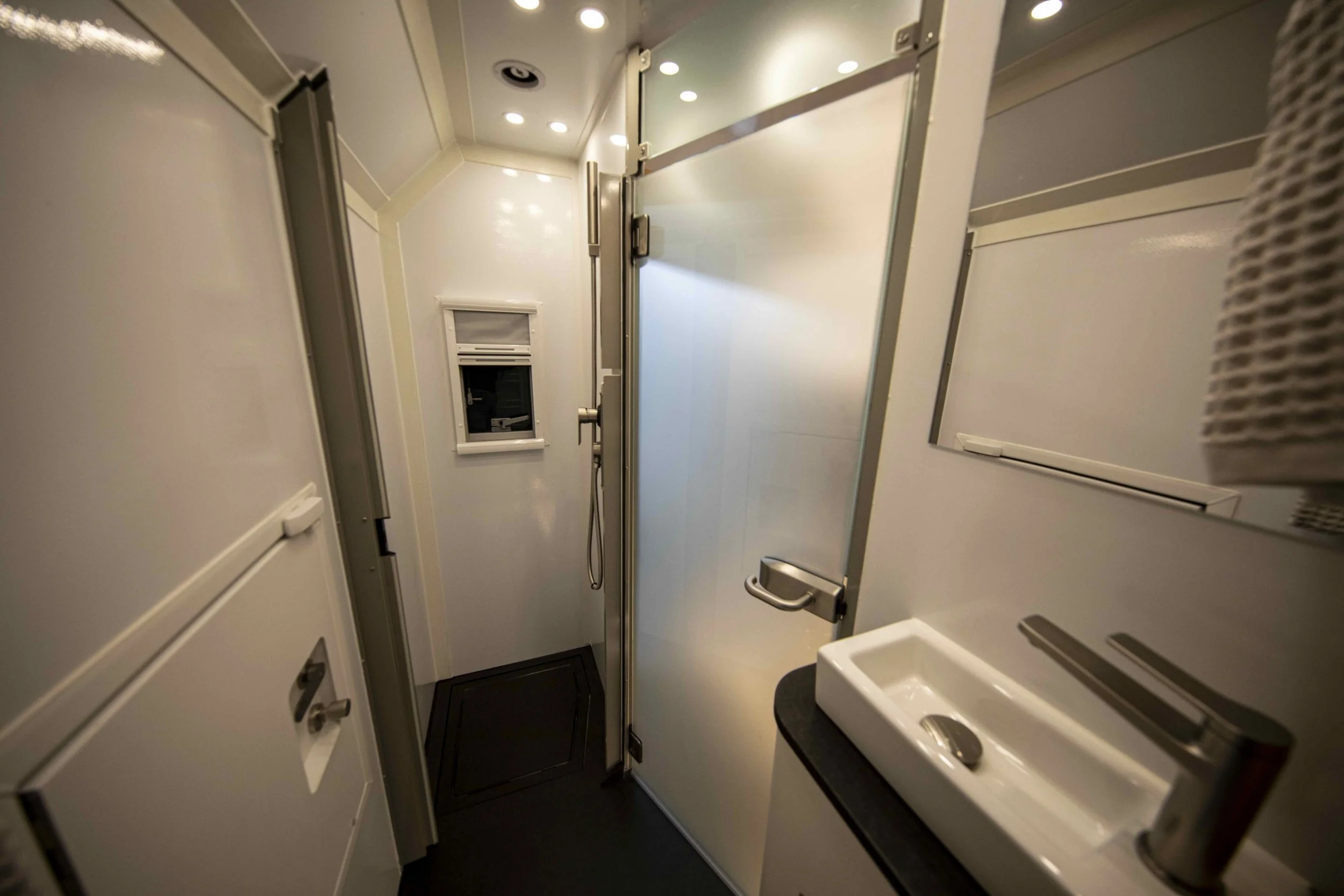
The Layout: We treated this like a small apartment. It’s a dedicated room integrated into the truck’s flow but separated by a frosted glass door for privacy.
Key Features:
Separate Shower: A full standing shower (no straddling a toilet while you wash).
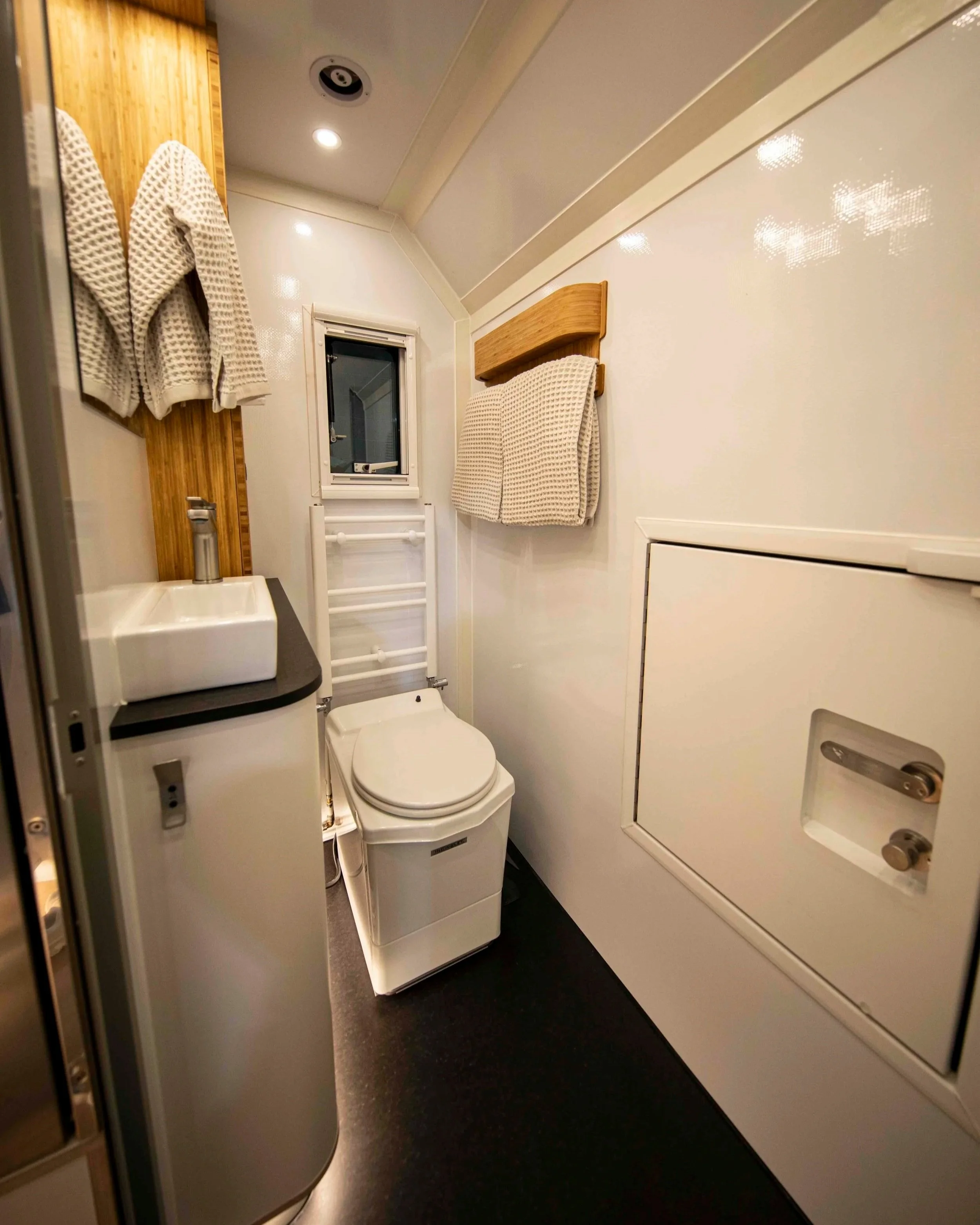
Incinerating Toilet: This truck features an incinerating toilet, which burns waste to ash—meaning no black water tanks to dump.
Vanity: A dedicated sink and vanity with storage for toiletries, just like at home.
Why It Works: For full-time living, having a "dry" zone to brush your teeth or get ready changes the entire feel of the trip.

The Mercedes-Benz Unimog
The Setup: The "Center-Bath" Efficiency Layout.
The Challenge: The Unimog is a beast off-road, but the cabin footprint is smaller than the Isuzu or other Mercedes trucks. We couldn't waste space on a hallway.
The Solution: We placed the bathroom in the center of the floor plan.
The Innovation: A standing shower with hot/cold water is the primary use of the space. To maximize room, the toilet is hidden in a cabinet and pulls out on heavy-duty slides only when needed.
Why It Works: This keeps the cabin open and spacious 90% of the time, but instantly converts into a private bathroom when necessary.

The Van Experience (Creative Efficiency)
In a Sprinter or Transit, every inch counts. This usually means a "Wet Bath" (shower and toilet in one space) or a "Hidden" setup.
The Modular Mercedes Sprinter
The Setup: The "Convertible" Wet Bath.
The Layout: The client wanted a standing shower but didn't want a permanent, cramping bathroom stall taking up the kitchen space.
The Solution: We built a dedicated, enclosed shower room with waterproof materials and a drain.
The Trick: The toilet isn't permanently mounted inside the shower pan (which takes up foot space). Instead, it lives in a cabinet next to the shower and slides in through a custom pocket door in the wall.
Why It Works: You get a spacious shower without tripping over a toilet, and a private toilet room without wasting floor space. It transforms based on the immediate need.
The Ford Transit
The Setup: Similar to the Sprinter above, focusing on the "Hidden Head" concept.
Why it helps the Layout: By hiding the toilet, we opened up the visual flow of the van, making a 144" or 170" wheelbase feel significantly larger.

The "Lite" & Emergency Options
For the weekend warrior or the solo traveler who prioritizes gear storage over luxury.
The "Bench Potty": In our lighter builds, we often hide a cassette toilet inside a bench seat. It’s invisible during the day but accessible in seconds.
Pros: Zero visual clutter, maximum floor space.
Cons: Less privacy (usually no walls around it).
The "Outdoor Shower" Concept:
The Setup: Instead of an indoor shower stall, we install a high-pressure hot/cold sink nozzle at the rear doors or a dedicated service port.
The Use Case: Perfect for rinsing off sand, mud, or wetsuits. When paired with a magnetic privacy curtain between the rear doors, it becomes a viable shower solution for 3-season travel.
"Pro-Tips" for Bathroom Design
Water Capacity is King: A standing shower is great, but only if you have the water to use it. Our trucks often carry 100+ gallons, allowing for daily showers. In a van with 20-30 gallons, an indoor shower is often a luxury used sparingly.
The Toilet Debate:
Cassette: Simple, portable, but needs frequent emptying.
Compost: Eco-friendly, no water use, but larger physically.
Incinerating: The gold standard for trucks. Zero waste, but requires power/fuel.
Ventilation: No matter the size, we always recommend a dedicated roof fan or window in the bathroom to control humidity.
Build Your Routine
At the end of the day, there is no "wrong" way to design a bathroom for an expedition vehicle—only the way that fits your adventure. Do you need a spa-like retreat after a week of hiking? Or just a simple emergency solution so you don't have to dig a hole in the rain?
Whether it’s the sprawling luxury of the Isuzu FTR or the clever engineering of a Sprinter wet bath, we have the experience to integrate it seamlessly.
Ready to start planning your layout?
Reach out to our design team. Let’s figure out exactly what fits in your footprint.