
So, You Want to Buy a Unimog? The Ultimate USA Buyer’s Guide
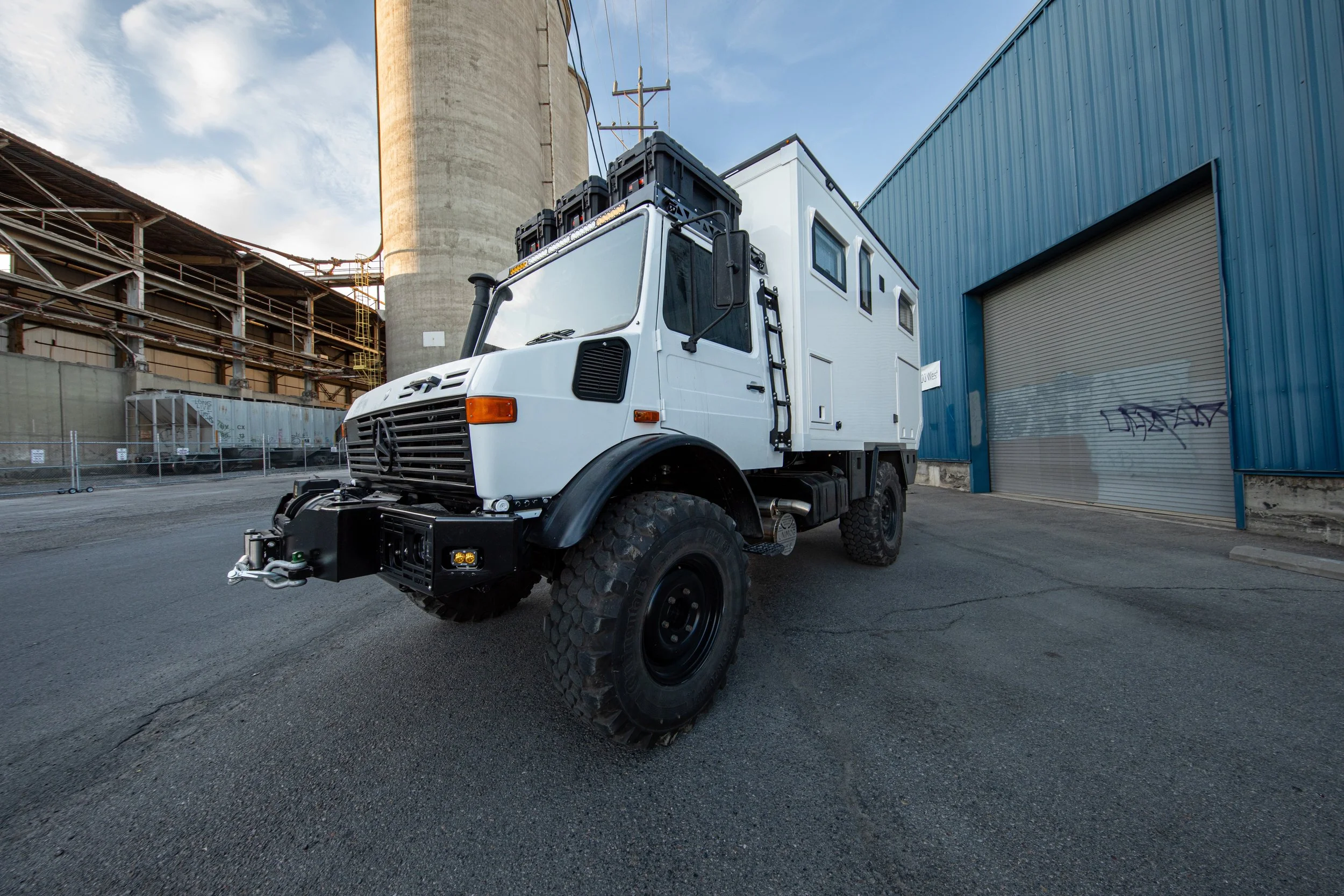
The Mercedes-Benz Unimog (Universal-Motor-Gerät) is the undisputed king of heavy-duty off-roading. With its unmatched ground clearance, legendary articulation, and utilitarian charm, it’s the ultimate dream platform for global overlanders.
If you’ve spent any time searching for a "Unimog for sale in the USA," you’ve likely realized that acquiring and building one of these beasts is a complex puzzle. Navigating federal import laws, decoding model designations, and understanding unique mechanical engineering are all part of the process.
Whether you are hunting for a vintage military surplus truck or a rare modern chassis, here is the blueprint you need before pulling the trigger.
1. Importation & The 25-Year Rule
The biggest hurdle for American buyers is US Customs and Department of Transportation (DOT) regulations. Under federal law, any vehicle not originally manufactured for the US market must be at least 25 years old to be legally imported without meeting strict, cost-prohibitive federal motor vehicle safety standards.
When looking at inventory, your options generally split into two distinct categories:
The Vintage Route (25+ Years Old)
Common Models: U1300L, U416, U1700.
The Pros: Mechanically simple, highly reliable, and largely free of complex electronics. They are widely available in Europe as military or municipal surplus.
The Cons: Top highway speeds are generally limited to 50–55 mph. Cab comfort is spartan, and noise levels are high without custom soundproofing.
The Modern Route (US-Spec or Exceptions)
Common Models: U500.
The Pros: Between 2002 and 2007, Freightliner officially imported a limited number of North American-spec U500s. These feature modern comforts, cruise control, and highway speeds capable of keeping up with interstate traffic (up to 70 mph).
The Cons: They are incredibly rare, highly sought after, and carry a massive price premium.
2. Unimog Anatomy: Mechanical Quirks to Know
A Unimog is not just a heavy-duty truck; it is an agricultural tractor crossbred with an extreme off-roader. Buyers must understand three core mechanical features:
Portal Axles
Unlike standard trucks where the axle sits in the center of the wheel, a Unimog uses portal gears at the wheel hubs. This raises the axle housing well above the wheel center, providing massive ground clearance (often over 18 inches) without requiring giant, impractical tires.
The Flexing Chassis & Torque Tubes
A Unimog frame is designed to twist. The engine, transmission, and axles are linked via torque tubes that enclose the drive shafts, acting as massive pivot points. This allows extreme wheel articulation, keeping all four tires on the ground over brutal terrain.
Working and Crawler Gears
Many Unimogs come equipped with complex transmissions featuring working, crawler, or even super-crawler gear ranges. This allows the truck to crawl at fractions of a mile per hour at high RPM—perfect for technical obstacles, though overkill for standard highway driving.
3. The Build: From Chassis to Expedition Camper
Buying the truck is only the first 20% of the journey. Turning a utility chassis into a liveable habitation space requires highly specialized engineering.
The Non-Negotiable 3-Point Subframe
Because a Unimog frame is engineered to twist and flex to maintain traction, you cannot rigidly bolt a rigid camper box directly to the chassis. Doing so will cause the camper box to crack, distort, or rip away from the frame during off-road articulation.
*Crucial Buyer's Tip: Any viable Unimog camper must utilize a 3-point or 4-point pivoting subframe. This kinetic mounting system allows the truck frame to twist freely underneath the camper while the living habitat remains completely isolated, level, and stress-free.
Packaging "Compact Luxury"
While a Unimog has a commanding presence, its usable frame length is often shorter than a standard domestic heavy-duty pickup truck. Designing a camper requires smart, space-efficient floor plans. Maximizing this footprint means integrating compact, residential-grade systems:
High-efficiency 12V/24V marine refrigeration.
Lithium-iron-phosphate (LiFePO4) battery banks paired with high-output solar arrays.
Diesel-fired hydronic heating systems for simultaneous cabin and water heating.
4. Maintenance, Parts, and Support
Owning a Unimog requires a shift in mindset regarding maintenance. You cannot pull into a local quick-lube or standard heavy-truck dealership.
Global vs. Local Parts: Because Mercedes-Benz commercial vehicles operate worldwide, engine and drivetrain parts are highly accessible globally. However, in the USA, sourcing parts often requires ordering through specialized brokers or directly from European distributors.
Specialized Fluids & Maintenance: Unimogs require specific hub oil changes, torque-tube inspections, and pneumatic system maintenance (as they rely on air-over-hydraulic brakes and air-actuated lockers).
Navigating Your Purchase
If you are searching for a "Unimog camper for sale in the USA," you will likely find that pre-built rigs rarely align perfectly with your specific travel goals, or they suffer from outdated technology.
For most buyers, the most successful route is sourcing a clean, mechanically sound base chassis—either a legally imported vintage model or a rare domestic U500—and building a bespoke habitation box from scratch.
At ACME Overland, we specialize in navigating this exact process. We help enthusiasts source the ideal chassis, engineer the critical kinetic subframe systems, and design custom, rugged living spaces tailored for global exploration.
Are you trying to decide between a vintage mechanical platform or a modern chassis for your upcoming build? Let us know what kind of terrain you plan to tackle, and we can help you map out the right strategy.