
Heavyweight Recovery Gear: Essential Sizing for Expedition Rigs
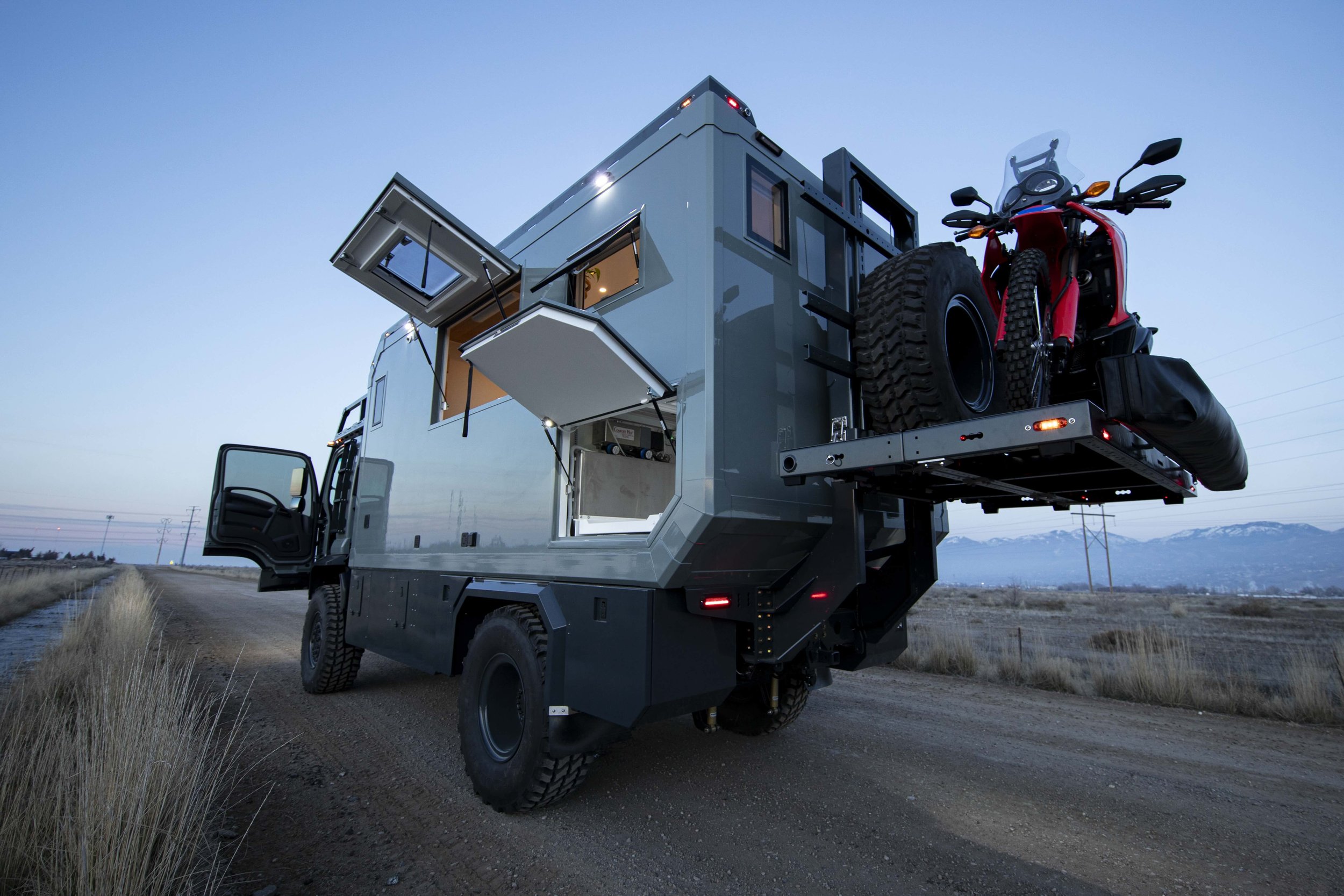
When an expedition truck gets bogged down, suction and terrain resistance multiply the effort required to pull it free. Operating heavy hardware demands a fundamental shift in equipment rating, rigging technique, and structural awareness.
Standard off-road recovery gear designed for 5,000 lb SUVs quickly becomes a critical safety hazard when applied to a 15,000 to 26,000 lb expedition land vessel. When navigating deep mud, silt, river crossings, or technical terrain, self-recovery requires commercial-grade equipment engineered to handle massive kinetic forces safely and efficiently.
1. High-Capacity Winching Systems and Working Load Limits
A proper winch setup must account for working load limits (WLL) that exceed your vehicle’s Gross Vehicle Weight Rating (GVWR) by at least 1.5x. For a fully loaded 20,000 lb vehicle, a standard light-duty winch will overload, heat up, and fail under sustained force.
Heavy-duty hydraulic winches—powered directly by the vehicle’s power steering pump or PTO—or commercial-grade 16,500+ lb electric winches paired with heat-resistant synthetic lines deliver continuous, reliable pulling power. Synthetic lines drastically reduce kinetic energy hazard if a snap occurs, while offering significant weight savings over traditional steel cable.
2. Heavy-Vehicle Traction and Kinetic Rigging
High-Load Traction Boards: Standard composite tracks designed for light 4x4s crush instantly under the concentrated axle weight of an expedition rig. Heavy-vehicle rated aluminum or high-density composite traction boards provide essential footprint expansion on soft silt, deep mud, or loose sand.
Rigging Hardware and Kinetic Force: Utilizing high-tonnage soft shackles, rated kinetic recovery ropes, and heavy-duty snatch blocks allows you to double line-pull capacity while dampening shock loads. High-tonnage snatch blocks mechanical advantage reduces stress on electrical or hydraulic systems during prolonged recoveries.
3. Chassis Anchor Points and Frame Integrity
A recovery system is only as reliable as its physical connection to the chassis. Applying tens of thousands of pounds of recovery force to an improper bumper or tow point can twist or permanently deform a frame.
As highlighted in our deep dive on Weight Distribution & Payload: Protecting Your Overland Build, managing total vehicle mass and structural load capacity is essential to safe operation. ACME Overland integrates rated recovery points directly into the main frame rails and custom bumper assemblies. This approach distributes immense pull forces evenly across the structural core of the truck, ensuring frame integrity even during extreme off-angle extractions.
In remote environments, properly rated hardware protects both your vehicle investment and the safety of your crew.
Ready to Build a Fully Autonomous Land Vessel?
From high-capacity recovery systems to custom subframe engineering, every detail of an ACME build is designed for ultimate backcountry reliability. Contact the ACME Overland team today to discuss your vision and start designing your custom platform.