
Sizing Your Off-Grid Water System: How Much Capacity Do You Really Need?
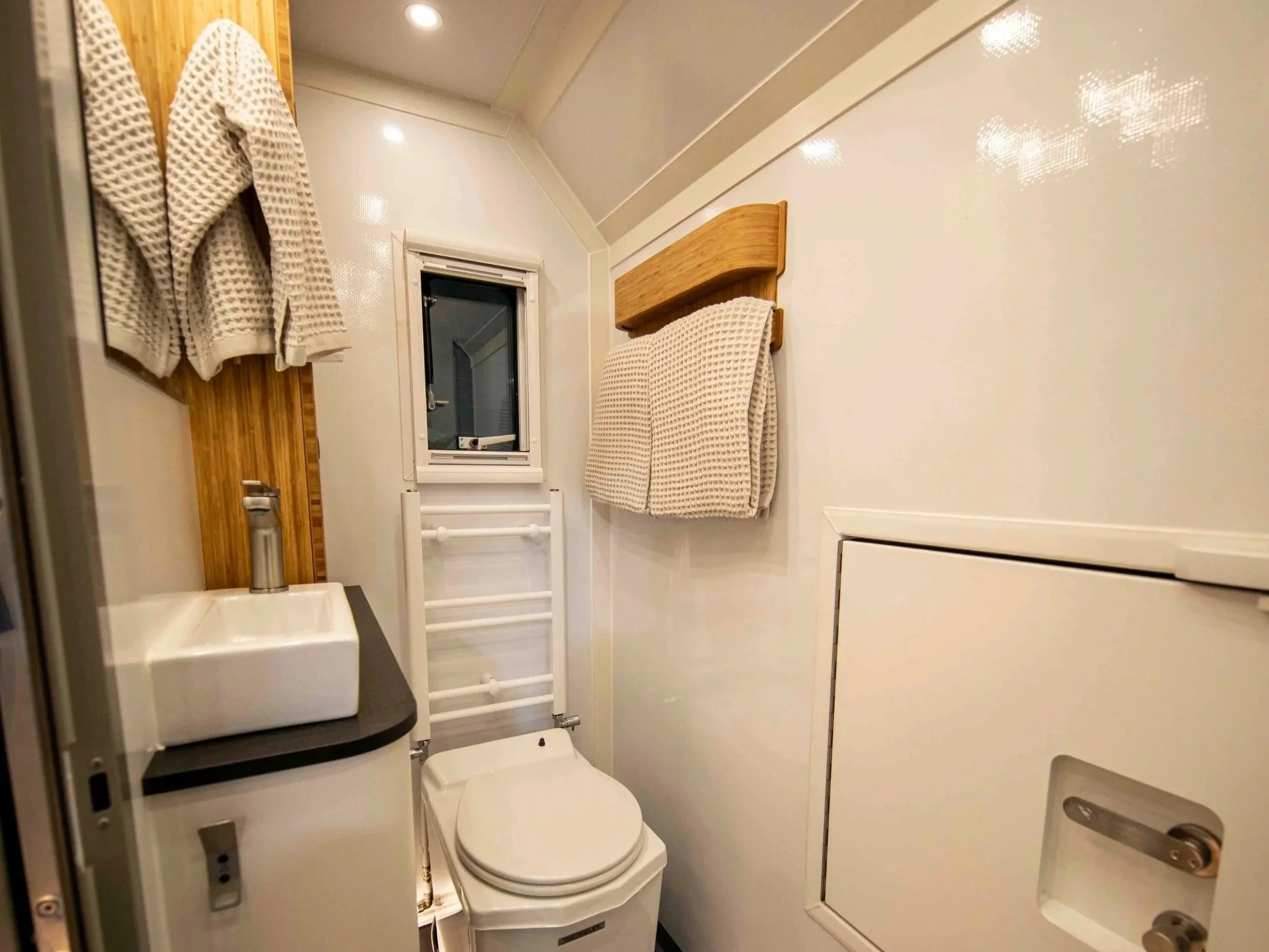
When designing a mobile estate, water architecture is not just a utility—it is the very foundation of your autonomy, safety, and comfort in the world’s most remote environments.
A frequent consideration for owners entering the expedition truck world is balancing daily consumption against chassis payload. At ACME Overland Limited Co., we engineer custom freshwater solutions around heavy-duty, baffled stainless steel and food-grade poly tanks integrated directly into the subframe to maintain a low center of gravity.
Let’s take a look at why sophisticated freshwater design is a critical investment for off-grid leisure, and how it fundamentally redefines the capability of your vehicle.
1. Calculating Consumption and Living Capacity
For the discerning traveler, staying off-grid should never mean sacrificing standard-of-living essentials. A realistic allocation for two travelers ranges from 4 to 8 gallons per day to comfortably cover drinking, galley prep, dishwashing, and daily hygiene.
By engineering systems with 60-to-100+ gallon capacities, these land vessels deliver weeks of uninterrupted independence without requiring frequent water sourcing or compromising your itinerary. Managing these substantial volumes requires precise engineering; as explored in our deep dive on Weight Distribution & Payload: Protecting Your Overland Build, water represents one of the largest dynamic variable loads on your vehicle. Baffling interior tank structures prevents liquid sloshing, ensuring your chassis maintains predictable handling on off-camber trails.
2. Multi-Stage Filtration and Water Security
Sourcing water from unverified remote taps or natural streams introduces unnecessary risk to your expedition. Integrating multi-stage filtration—combining heavy-duty sediment pre-filters, activated carbon blocks, and medical-grade UV-C purification—ensures every drop drawn into your truck is completely sterile and safe to consume.
This solid-state purification approach removes chemical taste, heavy metals, bacteria, and viral pathogens without requiring messy chemical treatments or complex maintenance overhead. Operating a self-contained filtration system gives you the freedom to draw from lakes, rivers, or rustic well points anywhere on earth with total confidence in your onboard supply.
3. Cold-Weather Thermal Protections and Sub-Zero Operation
Sub-zero climates present severe risks to exposed plumbing and external valves. Housing your freshwater tanks, water heater, and manifold distribution systems entirely within the insulated thermal envelope of the truck prevents costly freeze damage and keeps your amenities fully operational down to extreme negative temperatures.
Additionally, internal heat tracing and insulated greywater valves keep drainage systems fully functional in arctic conditions, ensuring true year-round capability. Protecting these critical systems internally keeps external components streamlined and clear of hazards when navigating tight trails or recovering from sticky situations—a topic detailed in our guide to Heavyweight Recovery Gear: Essential Sizing for Expedition Rigs.
The ACME Engineering Standard
The ACME standard balances absolute off-grid autonomy with intelligent chassis payload management, ensuring your vessel remains agile off-road while providing uncompromising luxury inside. Every drop of water carried is calculated to extend your range without overloading your suspension or compromising vehicle dynamics.
Are you ready to experience the pinnacle of mobile estates? Contact the ACME Overland team today to discuss your build specifications and learn more about our custom platforms.